A Blackwell AI Chip Sells for $40,000. An RTX 5090 Sells for $2,000, When You Can Find One.


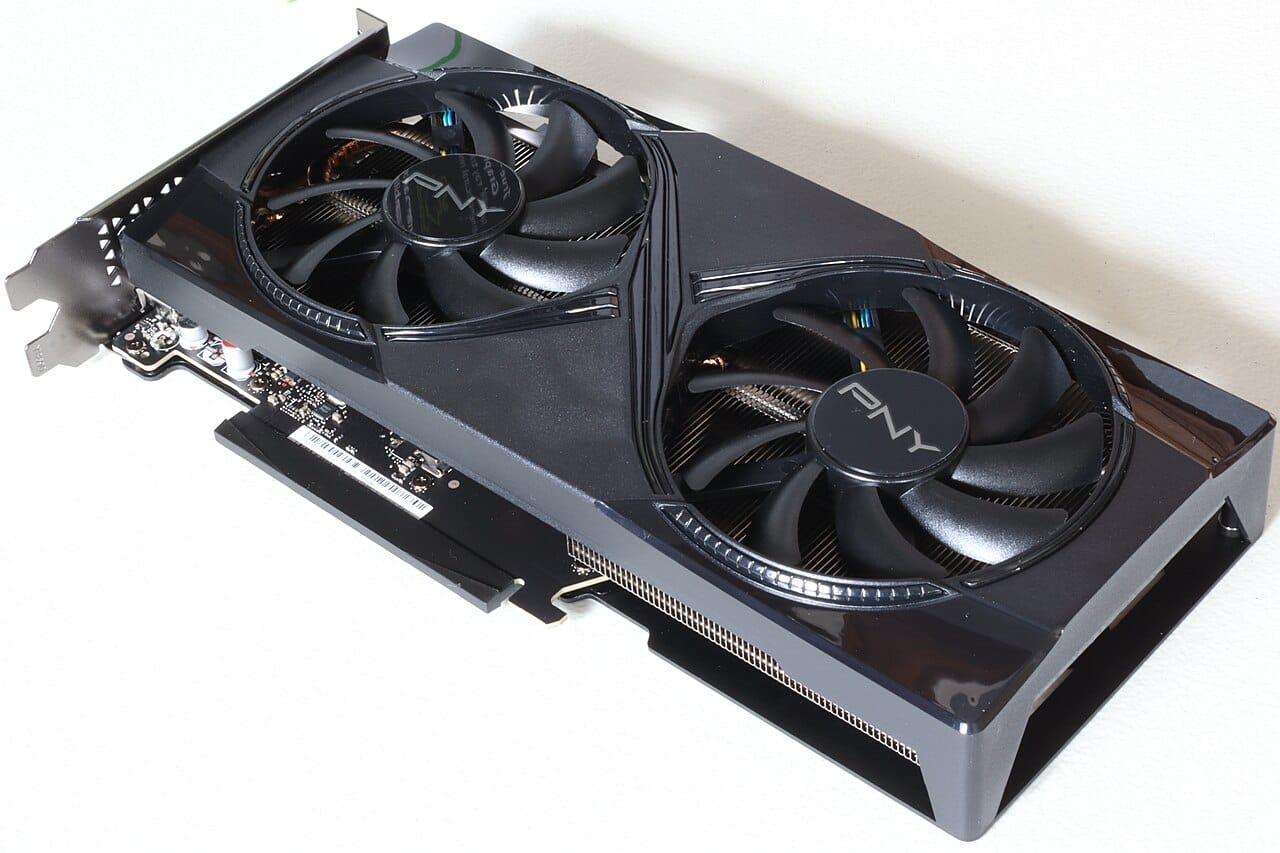
A single AI datacenter chip from Nvidia sells for somewhere between $30,000 and $40,000. A gaming graphics card from the same company sells for $299 to $1,999 — when you can find one at all. Nvidia's own CEO has said the quiet part out loud, and the math explains everything about why your next GPU upgrade is going to be expensive, late, or both.
Same Company, Two Customers, One Obvious Favorite
Jensen Huang told CNBC exactly what a Blackwell B200 AI chip costs a buyer: $30,000 to $40,000 per unit. A GeForce gaming card, built by the same company on adjacent production lines, tops out under $2,000. Nvidia's own financial reporting makes the imbalance concrete — in fiscal year 2025, the company's data center business pulled in $115.2 billion in revenue, while gaming brought in $11.4 billion. Data center now accounts for something like 87% of Nvidia's total revenue. Gaming, the business that built Nvidia's brand for two decades, is a rounding error next to it.
The Factories Are Booked Solid, and Not for You
None of this happens in a vacuum — Nvidia's AI chips are manufactured by TSMC, whose advanced packaging capacity has become the tightest resource in the entire tech industry. TSMC's CEO told shareholders in June 2026 that this capacity was "extremely tight and sold out through 2026," with the company's advanced-packaging facilities reportedly booked with year-plus lead times into 2027. TSMC's high-performance-computing segment — the AI-anchored one — now accounts for roughly two-thirds of the company's entire wafer revenue. Every wafer dedicated to a $35,000 AI chip is a wafer that isn't going toward the far less profitable business of making sure a gamer can buy a graphics card at MSRP.
January 2025: The Cards Existed for About Ten Minutes
The consumer end of this showed up exactly as you'd expect. When the RTX 5090 and RTX 5080 launched on January 30, 2025, at official prices of $1,999 and $999, both sold out almost instantly — a "paper launch," in the press's own preferred term for a product you can look at but not buy. Scalpers had RTX 5090s listed on eBay for over $6,000, with some listings reaching $7,000. In fairness to Nvidia, that specific launch also had a genuine, admitted manufacturing defect — Huang later acknowledged "a design flaw in Blackwell" that separately hurt yields — so not every bit of that particular shortage is a straight line back to AI. But the underlying incentive problem doesn't need any one bad launch to prove it: when a company can sell a chip for $35,000 or $300, one of those numbers is going to get more attention from the factory floor.
Nvidia's Own Warning, in Its Own Words
Nvidia doesn't dispute any of this — it's said so on its own earnings calls. CFO Colette Kress told investors in February 2026: "We expect supply constraints to be a headwind to gaming in the first quarter of fiscal 2027 and beyond... As much as we would love to have additional more supply, we do believe for a couple quarters, it is going to be very tight." That's a company confirming, on the record, that the product line gamers actually want is the one it's least equipped — or least motivated — to keep fully stocked. Nvidia will keep making graphics cards. It's just not going to lose any sleep over how few of them show up on shelves, as long as the factory has somewhere better-paying to put its capacity.
Filed from public reporting:
- CNBC — Nvidia faces backlash from gamers who feel abandoned for AI
- Nvidia — Q4 and Fiscal 2025 financial results
- Benzinga — RTX 5090 and 5080 sell out instantly, scalpers jack up prices to $6,000
- Tom's Hardware — Nvidia warns of constrained supply of gaming GPUs
- Tech Times — TSMC sets all-time revenue record as AI demand rewrites its calendar


