
Banned For Everyone
One person's fault, everyone else's new set of rules.

Singapore Banned the Import and Sale of Chewing Gum on 3 January 1992 After Gum Jammed MRT Train Doors. Chewing It Stayed Legal, and by 2004 a US Trade Deal Had Put Wrigley Back on the Pharmacy Shelf.
On 30 December 1991 Singapore's Environment Ministry issued a statement, and on 31 December the Straits Times carried it on page one under the headline "Chewing Gum to Be Banned." The ban took effect on 3 January 1992, four days after the announcement. It covered the


New York Replaced Its Payphones in 2016 With Free Sidewalk Kiosks That Let Anyone Browse the Web. Seven Months Later the Browsers Were Switched Off, Because People Were Using Them for Hours.
On 18 February 2016, Mayor Bill de Blasio stood at the corner of Third Avenue and 16th Street in Manhattan and made the first phone call from New York City's first LinkNYC kiosk. The kiosks were replacing the city's payphones, and each one offered free Wi-

A Japanese Town Put Up a 20-Metre Screen to Stop Tourists Photographing Mount Fuji Above a Lawson. Within a Week It Had Around Ten Holes, All at Eye Level and Just the Right Size for a Camera Lens.
Mount Fuji can be photographed from a great many places in Fujikawaguchiko, a lakeside town of about 10,000 people in Yamanashi Prefecture. One of them became more popular than the others. From a narrow stretch of pavement in front of a dentist's office, across a busy road

Blizzard Moved Dungeon Experience in World of Warcraft: Forever From the Monsters to the Quests. Two Weeks Into the Beta, It Halved the Quest Bonus Too.
On 12 September 2026, at BlizzCon, Blizzard announced World of Warcraft: Forever, a reimagined version of the 2004 game set before Molten Core, with a level cap of 60 and no plan to raise it. Blizzard's announcement described it as "a new permanent home alongside modern and

Airbnb Banned Parties Worldwide After a 2019 Halloween Shooting at a House Booked for a Family Reunion. By 2024 Its Software Was Deterring About 38,000 People in the United States From Renting a Whole House Over Halloween Weekend.
In late October 2019, a woman booked a large house in Orinda, California, through Airbnb. She told the owner she lived in Lafayette, that members of her family had asthma and needed to get away from the smoke of the Kincade Fire, and that she wanted to host a family

Congress Moved Cold Medicine Behind the Pharmacy Counter in 2005 to Shut Down Meth Labs. It Worked, and Four Years Later Meth Was the Cheapest and Purest It Had Been Since the Law Passed.
The Combat Methamphetamine Epidemic Act became law in 2005. It addressed a real and specific problem: methamphetamine was being manufactured in domestic kitchens, garages, and motel rooms, in quantities that made small-scale production a genuine public safety issue, out of pseudoephedrine bought from the cold and flu aisle. The

A Power Bank Stored in an Overhead Bin Destroyed an Air Busan Jet in January 2025. Airlines Across Asia Responded by Requiring Passengers Keep Their Power Banks Closer to Their Bodies, Not Farther Away.
On the night of 28 January 2025, an Air Busan Airbus A321 with 176 people aboard was preparing to taxi at Gimhae International Airport in Busan, South Korea, when a fire broke out in the rear cabin. Everyone evacuated down the slides; seven people came away with minor smoke-inhalation
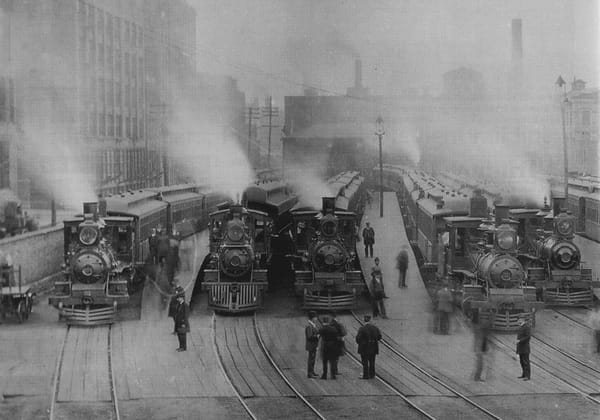
Railroads Gave Editors and Officials Free Passes for Life. Congress Decided That Looked Too Much Like a Bribe.
American railroads spent the late nineteenth century handing out free annual passes as a routine industry courtesy — to their own workers, to employees of connecting lines, and, generously, to newspaper editors and public officials. Nobody was supposed to be for sale. By the 1890s, plenty of people were, and the

New York Apartment Buildings Ban E-Bikes After a Record Year for Battery Fires
New York's delivery workers charge their batteries at home because there's nowhere else to do it. Now their buildings say they can't.