THE PATTERN
Trust is infrastructure. It's the invisible thing that lets a society run on fewer locks, fewer contracts, fewer guards, and fewer forms, because most people, most of the time, don't cheat you. High-trust societies are, by a wide margin, nicer places to live: cheaper to run, faster to move through, and pleasant in a way that's hard to describe until you've lived somewhere it's missing.
They are also, structurally, sitting ducks. The entire efficiency of a high-trust system comes from not checking, and the less checking there is, the longer a small number of people can quietly take advantage of that before anyone notices, and the more damage they can do once they've been at it a while. This is the same shape as every other story on this site, just with more zeroes on the end.
The mechanism
It goes like this, whether the "nice thing" is a return policy or a national economy:
- A system is built on the assumption that most participants act in reasonably good faith.
- That assumption is correct, for almost everyone, almost all the time, which is exactly what makes the system cheap to run.
- A small number of participants notice that "cheap to run" means "lightly supervised," and start extracting more than their share.
- Because the system wasn't built to catch this, it keeps not catching it, often for years.
- By the time it's caught, the abuse has compounded past the point where it can be quietly corrected. Everyone pays for the correction, not just the people who caused it.
Most of what we cover on this site plays that out at the scale of a company. Occasionally, it plays out at the scale of a country.
Case study: Iceland, 2003–2008
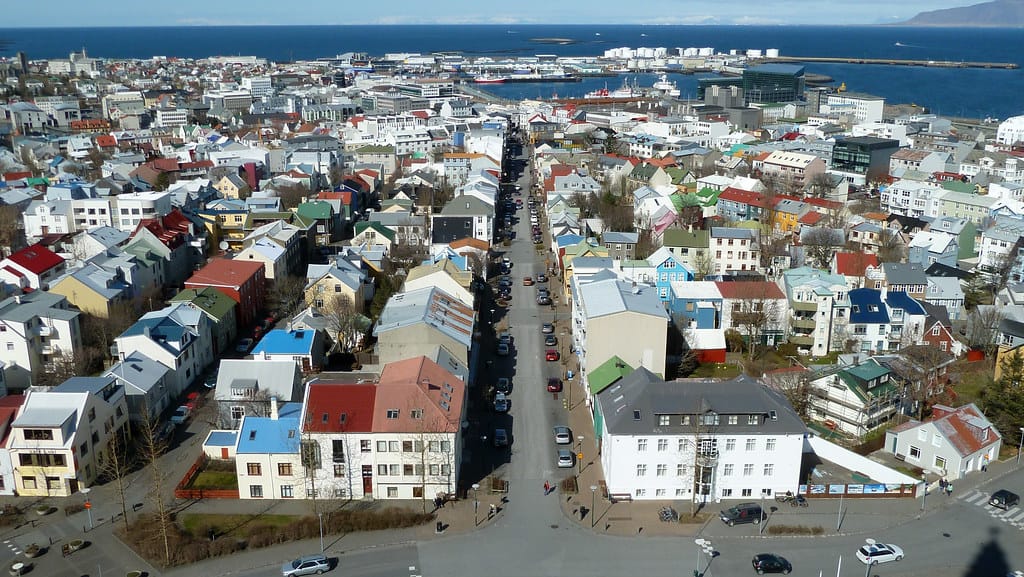
In the early 2000s, Iceland privatized its three major banks: Landsbanki, Glitnir, and Kaupthing. Iceland was, and still is, routinely ranked among the highest-trust societies in the world, a close-knit population of around 320,000 people with low corruption and a business culture where a handshake and a shared social circle counted for a lot. Banking supervision was light, largely because it had never needed to be otherwise.
The newly private banks used that light supervision to grow, fast. By 2008, the combined assets of Iceland's three banks had reached roughly ten times the country's entire GDP, a small nation's banking sector inflated to the size of a major economy, built largely on foreign borrowing and aggressive retail products like Icesave, an online savings account offering above-market interest rates to depositors in the UK and the Netherlands. Icesave alone drew in around 300,000 UK depositors, worth roughly £4 billion, before the collapse.
Behind the growth, a small number of bank executives and major shareholders were doing something simpler than it sounds: lending each other and their own companies enormous sums, in some cases to buy shares in their own banks, propping up the share price with money the bank itself had lent out. It worked for exactly as long as credit markets kept expanding, and not one day longer.
The collapse
When the 2008 global financial crisis hit international credit markets, Iceland's banks couldn't refinance their debts. All three failed within the same week in October 2008, one of the fastest and most complete banking collapses of a developed economy on record. The króna lost roughly half its value. The stock market lost about 90% of its value. Unemployment, close to zero before the crash, climbed toward one in ten. Many ordinary Icelanders, who had done nothing riskier than keep a mortgage or a savings account, watched both blow up at once, since a large share of household debt was indexed to inflation or held in foreign currency.
The Icesave accounts turned the collapse into an international incident: unable to get Iceland to guarantee British depositors' savings, the UK government invoked the Anti-terrorism, Crime and Security Act 2001 to freeze Landsbanki's UK assets, the Landsbanki Freezing Order 2008, briefly placing a NATO ally, in HM Treasury's own paperwork, in the same legal category as terrorist organizations. Iceland ultimately took a multi-billion-dollar IMF-led bailout, and the Icesave dispute with the UK and the Netherlands dragged on for years.
Who paid for it
Everyone who lived there. Iceland's population is about the size of a mid-sized American city, which meant the collapse wasn't an abstraction. It was a national event that touched nearly every household at once, through job losses, currency collapse, and years of austerity that followed the bailout.
Unusually, some of the people responsible paid too. Iceland's Office of the Special Prosecutor pursued criminal cases against dozens of bankers through the 2010s, an approach almost no other country hit by the 2008 crisis took. Kaupthing's CEO, Hreiðar Már Sigurðsson, was sentenced to five and a half years, and its chairman, Sigurður Einarsson, to four years, both for market manipulation. Landsbanki's CEO, Sigurjón Árnason, was sentenced to three years on related charges. Across all the cases the Special Prosecutor brought, several dozen bankers were convicted, with combined sentences measured in decades.
The pattern, again
Nothing about this is unique to banking, or to Iceland. It's the same shape as an all-you-can-eat buffet, a no-questions-asked return policy, or a comment section that only asks for a real name. Something works because most people don't push it. A handful of people push it anyway, for as long as the light supervision lets them. And the bill, when it finally arrives, gets split evenly among everyone who was just trying to use the nice thing as intended.
Filed from public reporting: the Icelandic Special Investigation Commission's report to the Alþingi, the Icelandic Supreme Court's rulings as summarized by the U.S. Library of Congress, the IMF's lending case study on Iceland, and the Landsbanki Freezing Order 2008.
Case study: L.L. Bean's Lifetime Guarantee, 1912–2018
For 106 years, the Maine-based outdoor retailer L.L. Bean operated on a policy that sounded like it was drafted by a naive golden retriever: 100% satisfaction guaranteed, essentially forever. If you weren't happy with a product, you could bring it back. No receipt, no strict time limit, no aggressive questioning. It was the retail equivalent of a high-trust society, assuming that if you brought back a pair of boots, it was because the stitching failed prematurely, not because you had just hiked the Appalachian Trail in them and didn't want them anymore.

The Mechanism
It worked because, for most of a century, "satisfaction" meant something reasonable to the average person. The system was cheap to run because the cashiers didn't have to act like claims adjusters.
Then the internet arrived, and with it, the optimization of everything. People realized that a "lifetime guarantee" structurally meant "free gear for life." A subculture of "customers" started scouring thrift stores, yard sales, and eBay for heavily used, decades-old L.L. Bean items. They would buy a frayed flannel shirt or worn-to-the-sole boots for $2, walk into a store (or mail them in), and exchange them for brand new merchandise or store credit.
Others simply treated the company like a free, rolling rental service. They would buy snow pants, let their kids outgrow them over three winters, and return them for a refund. Because the system wasn't built to catch this—and because the customer service reps were literally trained to trust the customer—it kept not catching it.

The Collapse
By the mid-2010s, the abuse had compounded past the point where the company could quietly absorb it as a marketing expense. L.L. Bean did the math: over a five-year period, they had lost $250 million to fraudulent or abusive returns. The rate of these returns had doubled in just five years, eventually making up 15% of all returns the company processed.
The company explicitly noted that a "small, but growing number of customers" had ruined the math. The phrase they used in the press was that people were "treating our guarantee like a lifetime product replacement program."
Who paid for it
Everyone else. On February 9, 2018, L.L. Bean sent the email. Executive Chairman Shawn Gorman announced the lifetime guarantee was dead. Returns were capped at one year, and you now needed a receipt or a digital record of the purchase.
The people who bought a pair of boots intending to keep them for twenty years, and who would have only returned them if the rubber genuinely and unexpectedly disintegrated, lost the safety net. The thrift-store flippers moved on to the next loophole, while regular shoppers got another set of strict rules to navigate.
The pattern, again
A system works because most people don't push it. A handful of people figure out how to monetize the honor system, for as long as the light supervision lets them. And the bill, when it finally arrives, gets split evenly among everyone who was just trying to buy a good pair of boots.
Filed from public reporting: L.L. Bean's open letter to customers (February 9, 2018)