Boeing Engineers Called Their Own Plane 'Designed by Clowns.' They Were Right.

A software system meant to quietly correct the plane's nose was, in two crashes, the thing that put it into the ground.

Share
Boeing Engineers Called Their Own Plane 'Designed by Clowns.' They Were Right.
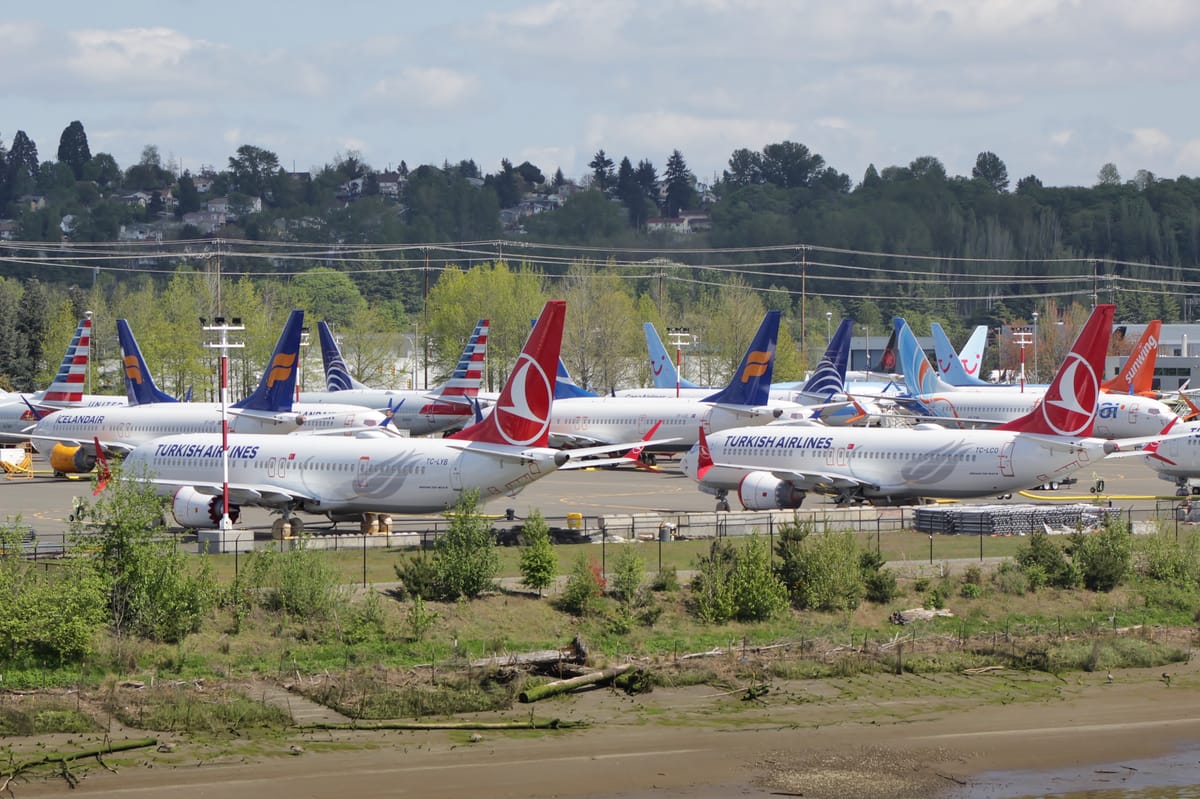
A grounded Boeing 737 MAX near Boeing Field, April 2019. Photo: SounderBruce, CC BY-SA 4.0.

The 737 MAX's new engines changed how the plane handled, so Boeing added software called MCAS to automatically correct the nose pitch, quietly, without pilots needing to know it existed or be retrained for it — retraining being expensive for airlines and a competitive disadvantage for Boeing. Internally, employees were less confident than the marketing. "This airplane is designed by clowns who in turn are supervised by monkeys," one wrote to a colleague in 2017.

Boeing's own chief technical pilot flagged "egregious" problems with MCAS in flight simulations as early as 2016, and later admitted in messages that he may have unintentionally misled the FAA about it. Another exchange, eight months before the first fatal crash, asked plainly: "Would you put your family on a Max simulator trained aircraft?" The answer was "No."

In October 2018, a Lion Air 737 MAX crashed off Indonesia. In March 2019, an Ethiopian Airlines 737 MAX crashed five months later. Both were traced to MCAS forcing the nose down based on a single faulty sensor reading, with pilots never told the system existed. 346 people died across the two crashes before the plane was grounded worldwide.

Boeing didn't hand the internal messages to the FAA until October 2019, months after the second crash and the global grounding. Reading them after the fact is less like uncovering a scandal and more like finding a signed confession that had been sitting in a drawer the whole time.


Filed from public reporting:

Read more

A Hand-Tightened Blind Flange and a Botched Shift Handover Killed 167 Men on Occidental Petroleum's Piper Alpha Platform in 22 Minutes. No One at the Company Was Ever Criminally Charged.

A Hand-Tightened Blind Flange and a Botched Shift Handover Killed 167 Men on Occidental Petroleum's Piper Alpha Platform in 22 Minutes. No One at the Company Was Ever Criminally Charged.

At around 10 p.m. on July 6, 1988, a pressure safety valve that had been pulled for maintenance that morning let gas condensate leak past a blind flange that had only been hand-tightened. Within 22 minutes, the Piper Alpha platform, 120 miles northeast of Aberdeen in the North

By The Complaints Department
Netflix Spent Six Years Telling Customers Love Is Sharing a Password. Once It Started Charging $7.99 a Month Per Shared Password Instead, Subscriber Growth Hit Its Best Year Since the Pandemic.

Netflix Spent Six Years Telling Customers Love Is Sharing a Password. Once It Started Charging $7.99 a Month Per Shared Password Instead, Subscriber Growth Hit Its Best Year Since the Pandemic.

On March 10, 2017, Netflix's official Twitter account posted four words that would follow the company around for the next six years: "Love is sharing a password." It was a promo tweet for a show called Love, but it was also, unmistakably, a policy statement — an

By The Complaints Department
New York Paused Congestion Pricing for 'Affordability' Weeks Before a 2024 Election, Then Relaunched It at a Lower Price Once Voting Was Over. A Year Later, Traffic Was Down 11 Percent and the Federal Government Was Still in Court Trying to Kill It.

New York Paused Congestion Pricing for 'Affordability' Weeks Before a 2024 Election, Then Relaunched It at a Lower Price Once Voting Was Over. A Year Later, Traffic Was Down 11 Percent and the Federal Government Was Still in Court Trying to Kill It.

On June 5, 2024, Governor Kathy Hochul stood before reporters and "indefinitely paused" New York's Central Business District Tolling Program, the long-planned congestion charge for driving into Manhattan below 60th Street. The launch was three weeks away. Hochul cited affordability concerns for working- and middle-

By The Complaints Department
Twitter Cut Off the Third-Party Apps That Built Its Developer Ecosystem in January 2023 With No Warning. One of Those Apps Coined the Word Tweet and Designed Twitter's Bird Logo Before Twitter Had Either.

Twitter Cut Off the Third-Party Apps That Built Its Developer Ecosystem in January 2023 With No Warning. One of Those Apps Coined the Word Tweet and Designed Twitter's Bird Logo Before Twitter Had Either.

On January 13, 2023, Twitter's API went dark for third-party client apps with no announcement and no explanation. Tweetbot, Twitterrific, Fenix, and others simply stopped working, all at once, for everyone. Developers spent days guessing whether it was a bug, an outage, or deliberate. Four days later,

By The Complaints Department