Cheating in Video Games Started With a Debug Code a Developer Forgot to Delete. It's Now a $293 Million Subscription Industry.
What began as an accidental button sequence in a 1986 shooter is now aimbots-as-a-service, kernel-level anti-cheat spyware for the honest, and a black market bigger than most film releases.


In 1986, a Konami engineer named Kazuhisa Hashimoto found the NES port of Gradius too hard to test, so he wired in a button sequence — up, up, down, down, left, right, left, right, B, A — that loaded a full set of power-ups. He meant to delete it before release. He forgot. It shipped inside Gradius, then became legend a year later inside Contra, where it was the only way most children born before 1980 ever finished the game. Nobody was harmed. Nintendo didn't sue anyone. It's printed on t-shirts now.
That was cheating's founding myth: a debugging shortcut, left in by accident, that made a hard game fair for everyone who typed it in. Forty years and several lawsuits later, it is a fundamentally different animal — a global, monetized, mostly Chinese-and-German-manufactured industry that quietly assumes any given round of your favorite competitive game may contain a stranger who paid a subscription fee to see through walls.
How It Escalated
The pivot from "cheat code" to "cheating" happened the moment games got other people in them. Early online shooters like Half-Life and Team Fortress Classic produced aimbots and wallhacks fast enough that in 2000, a fed-up player named Tony Ray built Even Balance and shipped PunkBuster, one of the first dedicated anti-cheat programs, specifically because he was tired of losing to people who could see through floors. Valve followed in 2002 with its own Valve Anti-Cheat system. Cheat forums answered right back: two of the largest, founded in 2000 and 2001, between them now claim more than seven million registered members, openly trading software whose entire purpose is defeating the software built to catch it.
By the mid-2000s, cheating had its first real business. Programmer Michael Donnelly built "Glider," a bot that played World of Warcraft's early levels by itself, unattended, and sold it through his company MDY Industries for $15 to $25 a license. By 2008 he'd sold 120,000 of them — about $3.5 million in revenue — while Blizzard fielded 465,000 player complaints about bots between 2004 and 2008 and spent roughly $940,000 a year just responding to them. Blizzard sued. The case reached the Ninth Circuit, which ruled in 2010 that Glider violated the DMCA's anti-circumvention provisions by sneaking past Blizzard's "Warden" detection system. It remains one of the foundational lawsuits in video game law, and it exists because someone turned a single-player convenience into a subscription product for a multiplayer economy that never asked for it.
Where It Is Now
Cheating today is a subscription service with a customer support team. The Call of Duty cheat provider EngineOwning sold aim-assist and wallhack packages priced from €4.49 for three days up to €39.95 for ninety — cheaper, per month, than the games themselves. In China, Tencent estimates the domestic cheatware market at more than 2 billion yuan a year, roughly $293 million, sold openly through storefronts on Taobao and Tmall and coordinated over QQ groups, despite years of police raids. Since 2018 the trade has been quietly moving toward hardware: plug-in devices that fake aim assistance or automate recoil control from outside the game's own code, specifically because they're much harder for developers to detect or ban than software is.
The scale of the cleanup effort tells its own story. PUBG's developers banned 3.2 million cheating accounts in 2023 alone, and now run weekly bans averaging 60,000 to 100,000 accounts — 131,078 in a single week spanning late October and early November 2025. PUBG Mobile has banned over 1.6 million accounts in a single five-day span at its peak. Counter-Strike 2 players spent much of 2023 and 2024 publicly complaining that Valve's real-time "VAC Live" detection wasn't catching anywhere near enough of them, that cheat websites were operating in the open and profiting from it, and that Steam Support was routinely declining ban requests backed by clear evidence. This is what "under control" looks like now: millions of bans a year, and everyone still convinced it isn't enough.
The People Who Got Caught
Some of it happens in full public view. In November 2014, Titan's star CS:GO player Hovik "KQLY" Tovmassian — fresh off playing the ESL One Cologne semifinals in front of a sold-out arena — received a Valve Anti-Cheat ban and was cut from his team days before a Major qualifier, costing Titan their slot. He later admitted the ban was fair, saying he'd trialed a cheat for about a week before joining the team after its developer convinced him other pros were already using it.
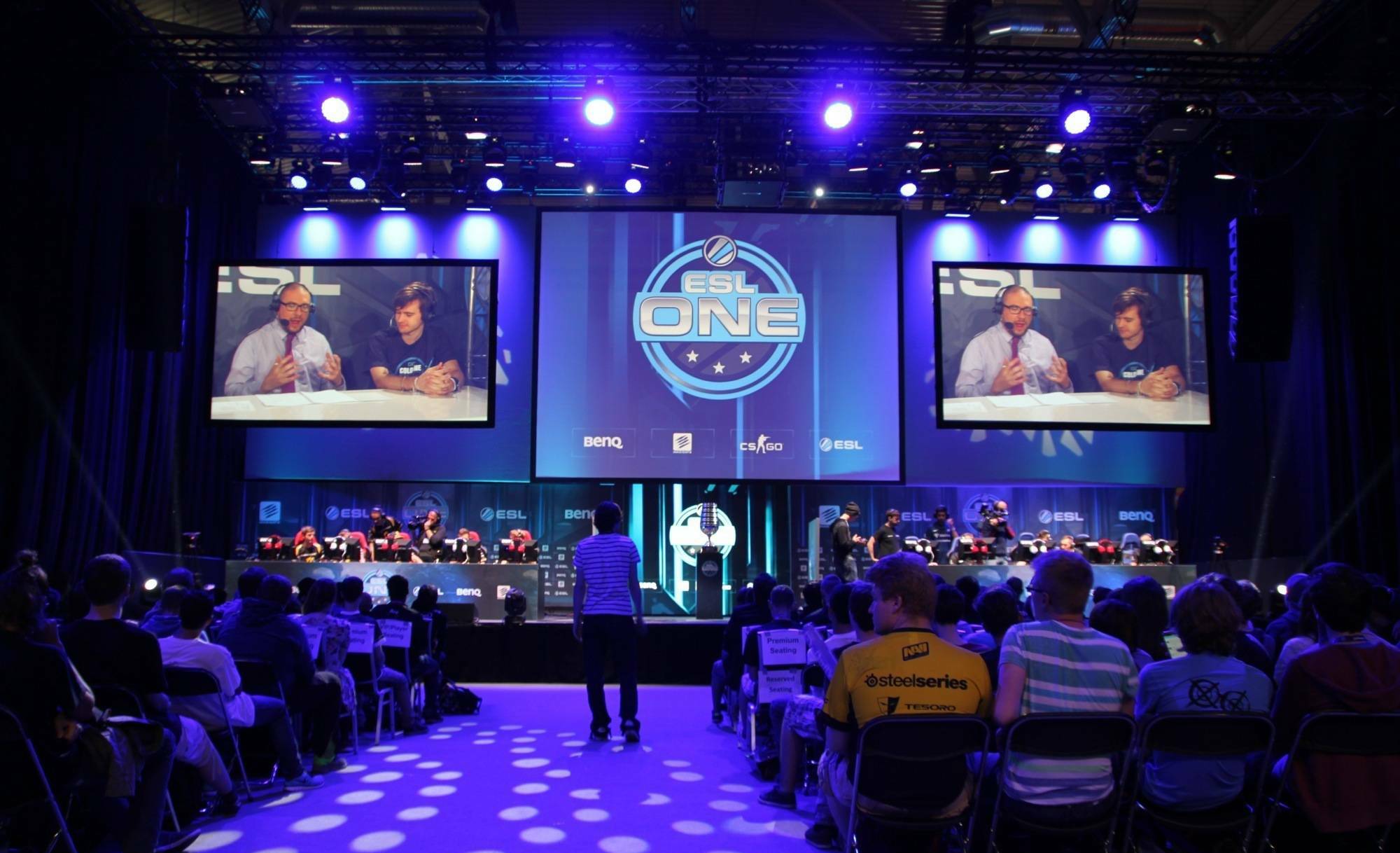
Four years later, at the 2018 eXTREMESLAND Asia Finals, OpTic India's Nikhil "Forsaken" Kumawat was caught mid-match after officials noticed the game had been paused for no visible reason. He refused to let staff examine his PC, then deleted a background program the moment he was ordered to alt-tab out. It took more than twenty minutes to confirm what everyone already suspected. He received a five-year ban from the Esports Integrity Commission, and organizers later found he'd used the same cheat months earlier at another tournament without anyone noticing.
The most theatrical case needed no investigation at all, because the cheater announced himself. During the Apex Legends Global Series regional finals in 2023, a hacker remotely forced an aimbot onto pro player Phillip "ImperialHal" Dosen's live broadcast and dropped a full wallhack overlay onto opponent Noyan "Genburten" Ozkose's screen, along with a chat message crediting himself by name. The tournament was halted and postponed live, mid-broadcast, in front of the audience it was supposed to be entertaining. The hacker later told a reporter he'd done it "for fun," to force the developers to patch the vulnerability he'd used to get in. They did. Eventually.
The Cheat Software Itself, and What Fighting It Costs Everyone Else
Game publishers have started fighting cheat vendors the way they'd fight a competitor, which is to say, in court. Activision won a $14.465 million default judgment against EngineOwning in 2025, plus attorney's fees, after the company simply stopped showing up to defend itself — and then said it planned to keep selling Call of Duty cheats anyway from its new base in Dubai. Bungie won roughly $4.4 million from Destiny 2 cheat seller AimJunkies in a case a jury decided was a copyright violation, one of the first cheat lawsuits ever to reach a jury at all. Tencent and Krafton won $10 million from a network of PUBG Mobile cheat makers across courts in the U.S. and Germany, with the defendants ordered to hand over the technical details of how the cheats worked. Epic Games, in its least dignified entry, sued a 14-year-old for advertising Fortnite hacks on YouTube in 2017 and spent three years fighting the boy's mother in court before quietly settling in 2021.

None of this litigation actually stops the arms race, so developers have started reaching deeper into players' computers instead. Riot Games' Vanguard, which polices Valorant and League of Legends, runs as a kernel-level driver with access to the deepest layer of the operating system, and sends encrypted data back to Riot whose exact contents players still can't fully verify. The justification is that cheats now operate at that same low level, so catching them requires matching that depth — but it means every honest player who wants to compete has to hand a company permanent, privileged access to their own machine, on faith, as the price of admission. Riot only made the driver optional for a subset of newer hardware in June 2026, a full six years after Vanguard shipped.
Which is the actual cost here, more than any single lawsuit or ban wave: an industry built on trusting strangers not to see through walls has spent a quarter-century responding to that trust being broken by installing progressively more invasive software on everyone, cheaters and honest players alike, because there was never a way to tell the two apart from the outside. The debug code Hashimoto forgot to delete in 1986 made a game easier for the person typing it. Everything cheating has become since exists to make the game harder to trust for everyone who isn't.
Filed from public reporting:


