Luckin Coffee Faked $310 Million in Sales to Look Like the Next Starbucks

A short-seller sent people to count customers in and out of stores by hand. It turned out to be the most reliable accounting Luckin had.

Share
Luckin Coffee Faked $310 Million in Sales to Look Like the Next Starbucks
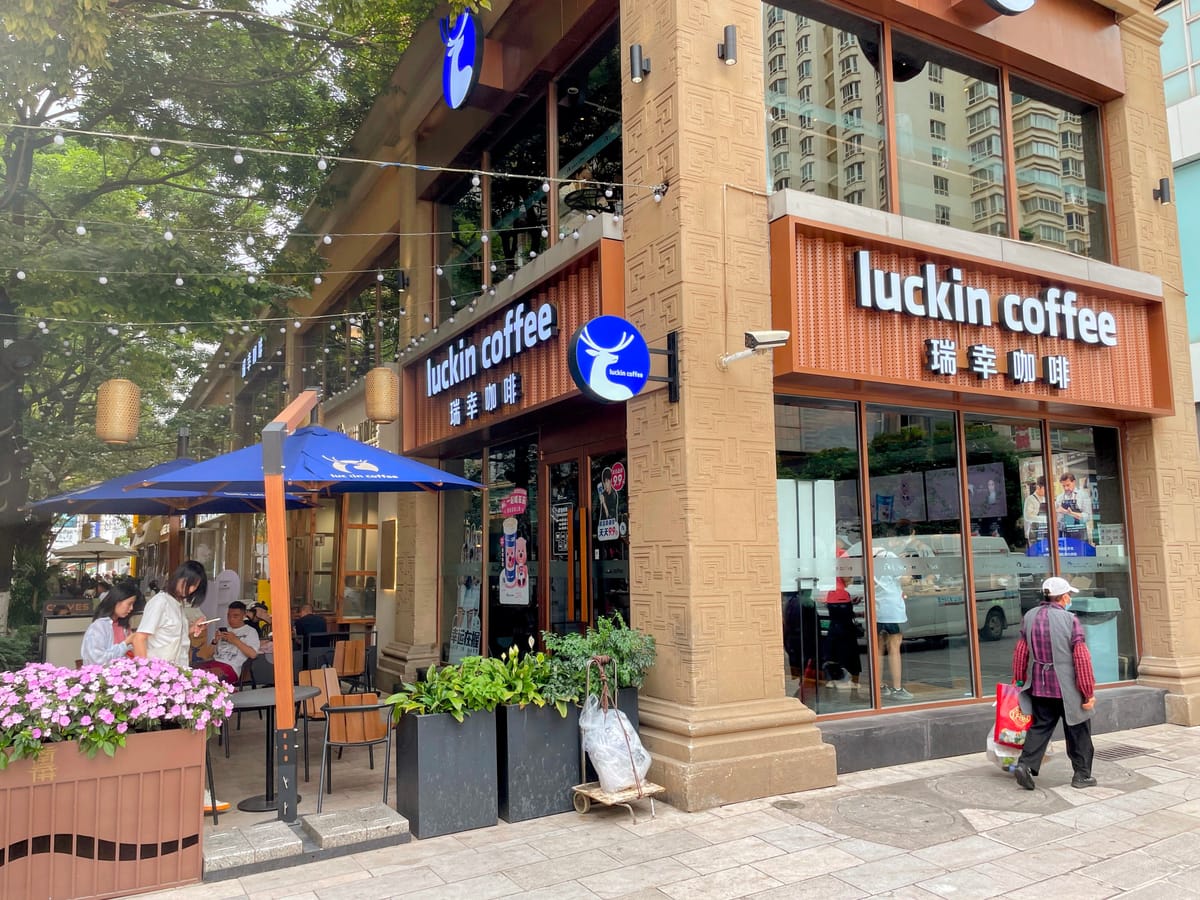
A Luckin Coffee storefront in Kunming, China. Photo: Amin, CC BY-SA 4.0.

Luckin Coffee went public on Nasdaq in 2019 pitched explicitly as China's answer to Starbucks — thousands of stores, aggressive growth, and sales numbers that impressed investors right up until a short-seller decided to actually go check.

In January 2020, Muddy Waters Research published an anonymous tip alongside its own field investigation: teams that had physically sat outside Luckin stores, filming for hours, counting real customers walking in and comparing that to Luckin's reported sales. Luckin's official response, on February 3, was to dismiss the report outright.

Two months later, on April 2, 2020, Luckin's own internal investigation confirmed it: the company had fabricated roughly $310 million in sales through 2019, using related parties to generate fake transactions, then inflating expenses by another $190 million and building a fake operations database to help the numbers hold up under a normal audit. Shares dropped more than 75% in a single day on the news. Luckin was delisted from Nasdaq in June 2020 and agreed to a $180 million settlement with the SEC that December.

The fraud was thorough enough that catching it required a research team physically counting cups of coffee by hand outside real stores — which is either an inspiring story about diligence, or a fairly damning statement about how little the paperwork could be trusted on its own. Commentators on Chinese business culture would recognize the pattern from the same saying cited elsewhere on this site: néng piàn jiù piàn, "if you can cheat, then cheat" — applied here not to a product, but to the sales figures themselves.


Filed from public reporting:

Read more

A Hand-Tightened Blind Flange and a Botched Shift Handover Killed 167 Men on Occidental Petroleum's Piper Alpha Platform in 22 Minutes. No One at the Company Was Ever Criminally Charged.

A Hand-Tightened Blind Flange and a Botched Shift Handover Killed 167 Men on Occidental Petroleum's Piper Alpha Platform in 22 Minutes. No One at the Company Was Ever Criminally Charged.

At around 10 p.m. on July 6, 1988, a pressure safety valve that had been pulled for maintenance that morning let gas condensate leak past a blind flange that had only been hand-tightened. Within 22 minutes, the Piper Alpha platform, 120 miles northeast of Aberdeen in the North

By The Complaints Department
Netflix Spent Six Years Telling Customers Love Is Sharing a Password. Once It Started Charging $7.99 a Month Per Shared Password Instead, Subscriber Growth Hit Its Best Year Since the Pandemic.

Netflix Spent Six Years Telling Customers Love Is Sharing a Password. Once It Started Charging $7.99 a Month Per Shared Password Instead, Subscriber Growth Hit Its Best Year Since the Pandemic.

On March 10, 2017, Netflix's official Twitter account posted four words that would follow the company around for the next six years: "Love is sharing a password." It was a promo tweet for a show called Love, but it was also, unmistakably, a policy statement — an

By The Complaints Department
New York Paused Congestion Pricing for 'Affordability' Weeks Before a 2024 Election, Then Relaunched It at a Lower Price Once Voting Was Over. A Year Later, Traffic Was Down 11 Percent and the Federal Government Was Still in Court Trying to Kill It.

New York Paused Congestion Pricing for 'Affordability' Weeks Before a 2024 Election, Then Relaunched It at a Lower Price Once Voting Was Over. A Year Later, Traffic Was Down 11 Percent and the Federal Government Was Still in Court Trying to Kill It.

On June 5, 2024, Governor Kathy Hochul stood before reporters and "indefinitely paused" New York's Central Business District Tolling Program, the long-planned congestion charge for driving into Manhattan below 60th Street. The launch was three weeks away. Hochul cited affordability concerns for working- and middle-

By The Complaints Department
Twitter Cut Off the Third-Party Apps That Built Its Developer Ecosystem in January 2023 With No Warning. One of Those Apps Coined the Word Tweet and Designed Twitter's Bird Logo Before Twitter Had Either.

Twitter Cut Off the Third-Party Apps That Built Its Developer Ecosystem in January 2023 With No Warning. One of Those Apps Coined the Word Tweet and Designed Twitter's Bird Logo Before Twitter Had Either.

On January 13, 2023, Twitter's API went dark for third-party client apps with no announcement and no explanation. Tweetbot, Twitterrific, Fenix, and others simply stopped working, all at once, for everyone. Developers spent days guessing whether it was a bug, an outage, or deliberate. Four days later,

By The Complaints Department