Railroads Gave Editors and Officials Free Passes for Life. Congress Decided That Looked Too Much Like a Bribe.

Share
Railroads Gave Editors and Officials Free Passes for Life. Congress Decided That Looked Too Much Like a Bribe.
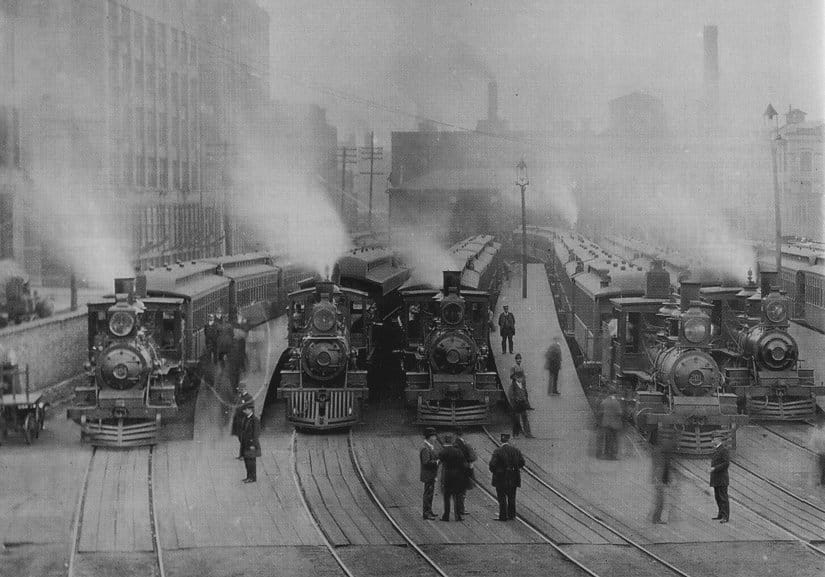
Randolph Street Station, Chicago, 1895. Photo: Wikimedia Commons, Public domain.

American railroads spent the late nineteenth century handing out free annual passes as a routine industry courtesy — to their own workers, to employees of connecting lines, and, generously, to newspaper editors and public officials. Nobody was supposed to be for sale. By the 1890s, plenty of people were, and the railroad handing out the passes knew exactly what it was buying.

A Courtesy That Scaled Into a Currency

The free pass started as ordinary professional courtesy, the kind every industry extends to people who cover it or regulate it. Most recipients were exactly what the practice assumed: reporters and officials who took a free ride and wrote or voted however the facts told them to. The railroads, however, controlled distribution, and distribution is leverage — a lesson they learned quickly and never unlearned.

"Satchels Full of Passes," Nebraska, 1894

The clearest documented flashpoint came from Omaha Daily Bee editor Edward Rosewater, who in August 1894 accused the Burlington and Missouri River Railroad of sending agents with "satchels full of passes" to the Nebraska Republican gubernatorial convention, handing them to delegates "with a lavish hand" to swing the nomination toward Thomas Majors. Recipients, Rosewater wrote, "feel bound to reciprocate by casting their votes in accordance with the request of the pass distributor." He called it "the wholesale pass scatteration of the Burlington bosses, to whom alone Majors owes his bought nomination" — an accusation from a rival paper, worth reading with that in mind, but not an isolated one. The pass had become a standing bribe with a courtesy title.

No Way to Tell a Free Ride From a Favor Owed

There was no mechanism built into the system to separate an editor riding a train to cover a story from an editor riding it because the railroad wanted his coverage a certain way — the pass looked identical either way, and the railroad had every incentive to keep printing more of them. Reformers argued the only fix was banning acceptance outright, on the theory that "so long as railroad pass bribery is winked at there can be no free choice of candidates in political conventions."

The Hepburn Act Ended It for Every Editor Who Never Took a Bribe

They won the argument. The Hepburn Act of 1906 banned free railroad passes nationally, except for actual railroad employees — closing the door on the practice for the officials who had genuinely never let a pass touch a vote, right alongside the ones who had. There was no way to write a narrower law; the whole point of the pass was that nobody outside the transaction could tell which kind they were looking at. Congress didn't try to sort the honest recipients from the bought ones. It just took the passes away from everybody.


Filed from public reporting:

Read more

A Hand-Tightened Blind Flange and a Botched Shift Handover Killed 167 Men on Occidental Petroleum's Piper Alpha Platform in 22 Minutes. No One at the Company Was Ever Criminally Charged.

A Hand-Tightened Blind Flange and a Botched Shift Handover Killed 167 Men on Occidental Petroleum's Piper Alpha Platform in 22 Minutes. No One at the Company Was Ever Criminally Charged.

At around 10 p.m. on July 6, 1988, a pressure safety valve that had been pulled for maintenance that morning let gas condensate leak past a blind flange that had only been hand-tightened. Within 22 minutes, the Piper Alpha platform, 120 miles northeast of Aberdeen in the North

By The Complaints Department
Netflix Spent Six Years Telling Customers Love Is Sharing a Password. Once It Started Charging $7.99 a Month Per Shared Password Instead, Subscriber Growth Hit Its Best Year Since the Pandemic.

Netflix Spent Six Years Telling Customers Love Is Sharing a Password. Once It Started Charging $7.99 a Month Per Shared Password Instead, Subscriber Growth Hit Its Best Year Since the Pandemic.

On March 10, 2017, Netflix's official Twitter account posted four words that would follow the company around for the next six years: "Love is sharing a password." It was a promo tweet for a show called Love, but it was also, unmistakably, a policy statement — an

By The Complaints Department
New York Paused Congestion Pricing for 'Affordability' Weeks Before a 2024 Election, Then Relaunched It at a Lower Price Once Voting Was Over. A Year Later, Traffic Was Down 11 Percent and the Federal Government Was Still in Court Trying to Kill It.

New York Paused Congestion Pricing for 'Affordability' Weeks Before a 2024 Election, Then Relaunched It at a Lower Price Once Voting Was Over. A Year Later, Traffic Was Down 11 Percent and the Federal Government Was Still in Court Trying to Kill It.

On June 5, 2024, Governor Kathy Hochul stood before reporters and "indefinitely paused" New York's Central Business District Tolling Program, the long-planned congestion charge for driving into Manhattan below 60th Street. The launch was three weeks away. Hochul cited affordability concerns for working- and middle-

By The Complaints Department
Twitter Cut Off the Third-Party Apps That Built Its Developer Ecosystem in January 2023 With No Warning. One of Those Apps Coined the Word Tweet and Designed Twitter's Bird Logo Before Twitter Had Either.

Twitter Cut Off the Third-Party Apps That Built Its Developer Ecosystem in January 2023 With No Warning. One of Those Apps Coined the Word Tweet and Designed Twitter's Bird Logo Before Twitter Had Either.

On January 13, 2023, Twitter's API went dark for third-party client apps with no announcement and no explanation. Tweetbot, Twitterrific, Fenix, and others simply stopped working, all at once, for everyone. Developers spent days guessing whether it was a bug, an outage, or deliberate. Four days later,

By The Complaints Department