Waze Lets You Report Police Locations. An Entire Sheriffs' Association Asked Google to Turn It Off.

Share
Waze Lets You Report Police Locations. An Entire Sheriffs' Association Asked Google to Turn It Off.
Photo by Max Fleischmann / Unsplash

Waze lets drivers crowdsource the location of speed traps and parked patrol cars, which is either a helpful public service or an officer-safety threat depending entirely on which side of the windshield you're on. In January 2015, the National Sheriffs' Association publicly asked Google to turn the feature off. Google's answer, in essence, was no — and a decade later, the feature that police groups called dangerous is still just sitting there in the app, reminding you to slow down.

A Feature Built for Drivers, Read as a Threat by Police

Waze's police-reporting function is popular for the most mundane reason possible: people don't want speeding tickets. But after the December 20, 2014 killing of NYPD officers Rafael Ramos and Wenjian Liu — whose shooter had reportedly been monitoring social media and apps referencing police beforehand — law enforcement groups reframed the feature as something closer to a targeting tool than a convenience. LAPD Chief Charlie Beck sent Google a letter dated December 30, 2014, arguing the app could put officers and the public at risk.
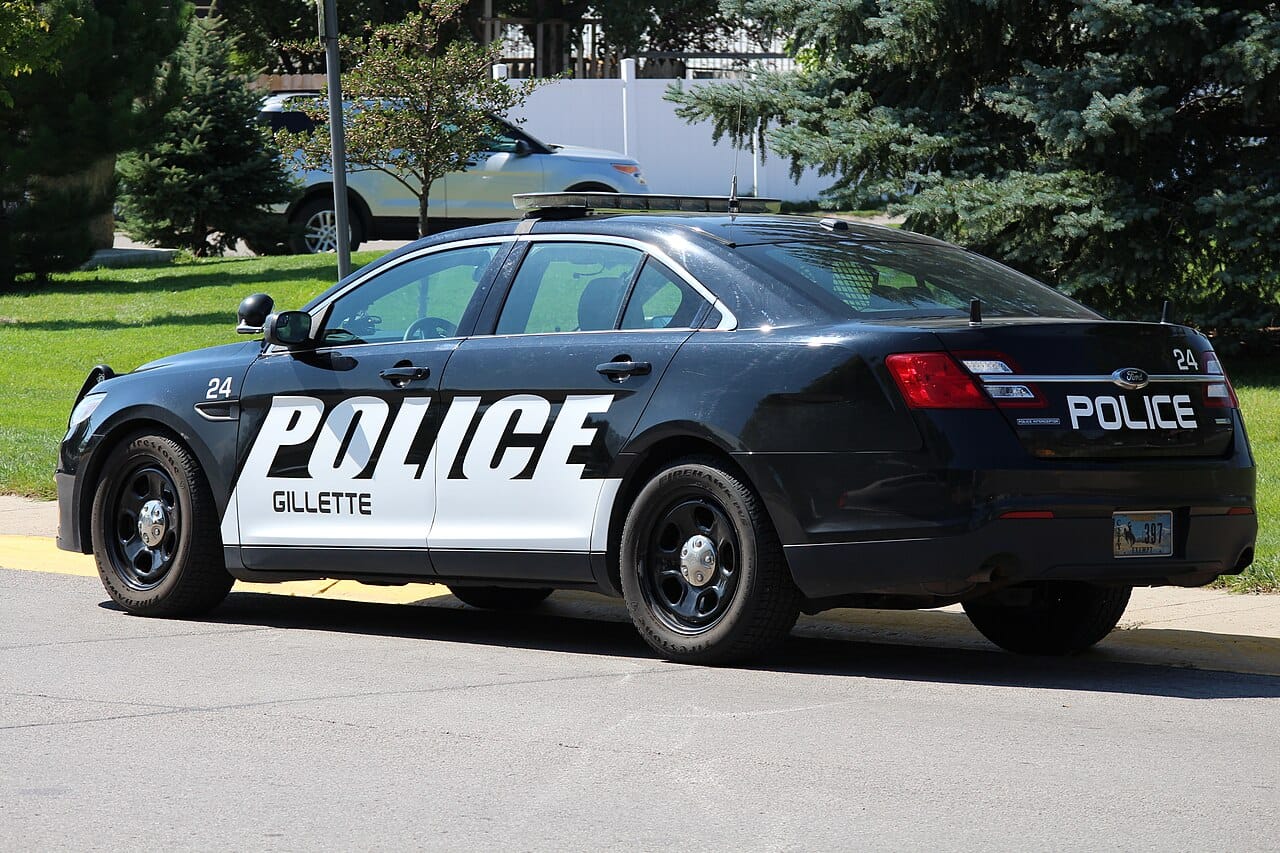
A parked police patrol car, the kind of sighting Waze users report to each other. Photo: Mr. Satterly, Wikimedia Commons, CC0 (Public Domain).

The National Sheriffs' Association Made It a Campaign

The Los Angeles police chief's letter turned into an organized push: the National Sheriffs' Association launched a public campaign in January 2015 specifically asking Google to disable police-location reporting, and the NYPD separately pressed for its removal over concerns about drivers evading DUI checkpoints rather than just speed traps. It was, briefly, one of the more visible law-enforcement-versus-Silicon-Valley standoffs of the decade — an entire national police organization on record asking a tech company to make its own product less useful.

Google Said No, and Explained Why

Waze spokeswoman Julie Mossler responded to the pressure campaign with a version of an argument traffic engineers have made for years: that visible enforcement, even crowdsourced, tends to make people drive more carefully, not less. "Most users tend to drive more carefully when they believe law enforcement is nearby," she told the Associated Press. Google didn't remove the feature, didn't quietly nerf it, and didn't issue a face-saving compromise — it just kept shipping the app the way it already worked, leaving the National Sheriffs' Association's campaign as a footnote rather than a policy change.

The Rare Nice Thing Nobody Actually Took Away

Most stories on this site end with the free or convenient thing getting restricted, sunset, or quietly monetized into something worse. This one is the exception that proves how unusual that pattern is: an organized, national-level campaign by an actual law enforcement association asked for a specific feature to be disabled, and it's still there, in the current version of the app, doing exactly what it did in 2015.


Filed from public reporting:

Read more

A Hand-Tightened Blind Flange and a Botched Shift Handover Killed 167 Men on Occidental Petroleum's Piper Alpha Platform in 22 Minutes. No One at the Company Was Ever Criminally Charged.

A Hand-Tightened Blind Flange and a Botched Shift Handover Killed 167 Men on Occidental Petroleum's Piper Alpha Platform in 22 Minutes. No One at the Company Was Ever Criminally Charged.

At around 10 p.m. on July 6, 1988, a pressure safety valve that had been pulled for maintenance that morning let gas condensate leak past a blind flange that had only been hand-tightened. Within 22 minutes, the Piper Alpha platform, 120 miles northeast of Aberdeen in the North

By The Complaints Department
Netflix Spent Six Years Telling Customers Love Is Sharing a Password. Once It Started Charging $7.99 a Month Per Shared Password Instead, Subscriber Growth Hit Its Best Year Since the Pandemic.

Netflix Spent Six Years Telling Customers Love Is Sharing a Password. Once It Started Charging $7.99 a Month Per Shared Password Instead, Subscriber Growth Hit Its Best Year Since the Pandemic.

On March 10, 2017, Netflix's official Twitter account posted four words that would follow the company around for the next six years: "Love is sharing a password." It was a promo tweet for a show called Love, but it was also, unmistakably, a policy statement — an

By The Complaints Department
New York Paused Congestion Pricing for 'Affordability' Weeks Before a 2024 Election, Then Relaunched It at a Lower Price Once Voting Was Over. A Year Later, Traffic Was Down 11 Percent and the Federal Government Was Still in Court Trying to Kill It.

New York Paused Congestion Pricing for 'Affordability' Weeks Before a 2024 Election, Then Relaunched It at a Lower Price Once Voting Was Over. A Year Later, Traffic Was Down 11 Percent and the Federal Government Was Still in Court Trying to Kill It.

On June 5, 2024, Governor Kathy Hochul stood before reporters and "indefinitely paused" New York's Central Business District Tolling Program, the long-planned congestion charge for driving into Manhattan below 60th Street. The launch was three weeks away. Hochul cited affordability concerns for working- and middle-

By The Complaints Department
Twitter Cut Off the Third-Party Apps That Built Its Developer Ecosystem in January 2023 With No Warning. One of Those Apps Coined the Word Tweet and Designed Twitter's Bird Logo Before Twitter Had Either.

Twitter Cut Off the Third-Party Apps That Built Its Developer Ecosystem in January 2023 With No Warning. One of Those Apps Coined the Word Tweet and Designed Twitter's Bird Logo Before Twitter Had Either.

On January 13, 2023, Twitter's API went dark for third-party client apps with no announcement and no explanation. Tweetbot, Twitterrific, Fenix, and others simply stopped working, all at once, for everyone. Developers spent days guessing whether it was a bug, an outage, or deliberate. Four days later,

By The Complaints Department