WeWork's Free Beer Was Unlimited Until the Company Needed Money More Than It Needed Culture

The kegerators were never really about the beer. Once the IPO collapsed, neither was the culture.

Share
WeWork's Free Beer Was Unlimited Until the Company Needed Money More Than It Needed Culture
The interior of a WeWork co-working office space. Photo: Ajay Suresh, Wikimedia Commons, CC BY 2.0.

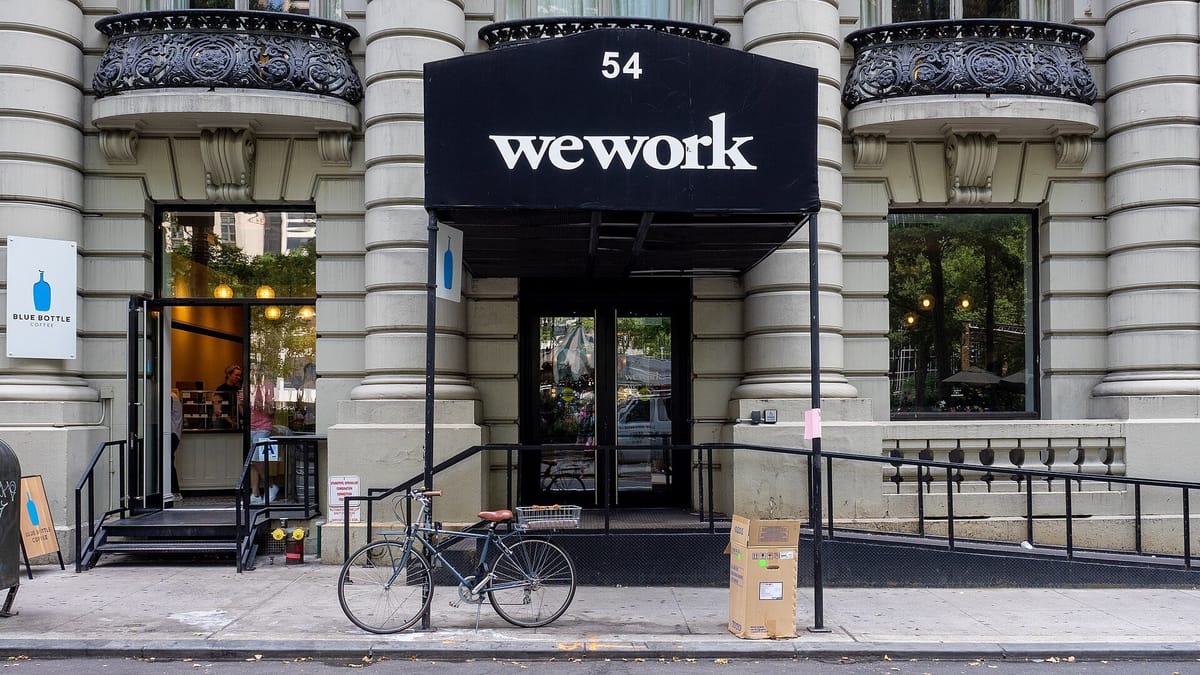
For most of the 2010s, a WeWork membership came with an implicit second product: beer. Kegerators on every floor, unlimited pours, no receipts, all day. It was one of the small, physical details that made the company feel less like commercial real estate and more like a lifestyle you'd bought into. WeWork spent 2020 quietly taking the beer away, floor by floor, after spending 2019 finding out the rest of the lifestyle wasn't real either.

The Perk That Was Doing Marketing's Job

Free beer wasn't a minor amenity buried in the fine print — it was one of WeWork's most visible selling points, the kind of detail that showed up in press coverage and building tours before anyone asked about desk prices or lease terms. It signaled, cheaply and effectively, that this wasn't a normal landlord. The generosity was doing real marketing work, right up until the company's finances made that generosity look less like culture and more like an unexamined cost line.

The First Cut Came Before the IPO Even Collapsed

WeWork had actually started rationing the taps as early as 2018 — limiting members to four pours a day, only between noon and 8 p.m. — well before its public unraveling. The bigger cut came after: WeWork's planned 2019 IPO collapsed within about six weeks amid investor alarm over its valuation and governance, co-founder Adam Neumann was pushed out, and by January 2020 the company announced it would end free beer and wine service at all of its locations entirely by the end of February.

"Not a Cost-Cutting Measure," They Said

A WeWork spokesperson framed the change as coming from an "expanded member satisfaction survey" rather than a budget decision — a distinction that landed, publicly, about as well as it reads here. Whatever the internal reasoning, the timing was hard to separate from the moment: a company that had just lost its IPO, its CEO, and a significant share of its public credibility was, in the same stretch, discovering that unlimited beer on every floor of every location was one of the easier places to find savings.

The Culture Was the Product, Until It Wasn't

WeWork's whole pitch had always blurred the line between "office space" and "community" — the beer was never really about the beer, it was a physical stand-in for a culture the company was selling alongside the desks. Once the company's fundamentals stopped supporting the pitch, the most visible, least defensible piece of it went first. The desks are still there. The thing that made them feel different from a normal office isn't.


Filed from public reporting:

Read more

A Hand-Tightened Blind Flange and a Botched Shift Handover Killed 167 Men on Occidental Petroleum's Piper Alpha Platform in 22 Minutes. No One at the Company Was Ever Criminally Charged.

A Hand-Tightened Blind Flange and a Botched Shift Handover Killed 167 Men on Occidental Petroleum's Piper Alpha Platform in 22 Minutes. No One at the Company Was Ever Criminally Charged.

At around 10 p.m. on July 6, 1988, a pressure safety valve that had been pulled for maintenance that morning let gas condensate leak past a blind flange that had only been hand-tightened. Within 22 minutes, the Piper Alpha platform, 120 miles northeast of Aberdeen in the North

By The Complaints Department
Netflix Spent Six Years Telling Customers Love Is Sharing a Password. Once It Started Charging $7.99 a Month Per Shared Password Instead, Subscriber Growth Hit Its Best Year Since the Pandemic.

Netflix Spent Six Years Telling Customers Love Is Sharing a Password. Once It Started Charging $7.99 a Month Per Shared Password Instead, Subscriber Growth Hit Its Best Year Since the Pandemic.

On March 10, 2017, Netflix's official Twitter account posted four words that would follow the company around for the next six years: "Love is sharing a password." It was a promo tweet for a show called Love, but it was also, unmistakably, a policy statement — an

By The Complaints Department
New York Paused Congestion Pricing for 'Affordability' Weeks Before a 2024 Election, Then Relaunched It at a Lower Price Once Voting Was Over. A Year Later, Traffic Was Down 11 Percent and the Federal Government Was Still in Court Trying to Kill It.

New York Paused Congestion Pricing for 'Affordability' Weeks Before a 2024 Election, Then Relaunched It at a Lower Price Once Voting Was Over. A Year Later, Traffic Was Down 11 Percent and the Federal Government Was Still in Court Trying to Kill It.

On June 5, 2024, Governor Kathy Hochul stood before reporters and "indefinitely paused" New York's Central Business District Tolling Program, the long-planned congestion charge for driving into Manhattan below 60th Street. The launch was three weeks away. Hochul cited affordability concerns for working- and middle-

By The Complaints Department
Twitter Cut Off the Third-Party Apps That Built Its Developer Ecosystem in January 2023 With No Warning. One of Those Apps Coined the Word Tweet and Designed Twitter's Bird Logo Before Twitter Had Either.

Twitter Cut Off the Third-Party Apps That Built Its Developer Ecosystem in January 2023 With No Warning. One of Those Apps Coined the Word Tweet and Designed Twitter's Bird Logo Before Twitter Had Either.

On January 13, 2023, Twitter's API went dark for third-party client apps with no announcement and no explanation. Tweetbot, Twitterrific, Fenix, and others simply stopped working, all at once, for everyone. Developers spent days guessing whether it was a bug, an outage, or deliberate. Four days later,

By The Complaints Department