Crucial Existed for Nearly Three Decades. Micron Killed It the Moment AI Started Paying More.
Micron, Samsung, SK Hynix, Western Digital, and Seagate all discovered the same thing at the same time: AI data centers pay more for memory and storage than you do. So now they sell to AI data centers.


On December 3, 2025, Micron announced it would shut down Crucial — the consumer memory and storage brand it had built for nearly three decades — by February 2026. Not spun off, not sold. Shut down. The official reason, from chief business officer Sumit Sadana, was that Micron had made "the difficult decision to exit the Crucial consumer business to improve supply and support for our larger, strategic customers in faster-growing segments." Translated out of earnings-call: your RAM stick was competing with Nvidia for the same silicon, and Nvidia won.
This wasn't Crucial's first amputation. Micron had already killed off Ballistix, its enthusiast gaming-RAM sub-brand, back in February 2022 — a quieter early tremor of the same decision made in full this time. What's different now is the reason, and the reason has a name: artificial intelligence, and its apparently bottomless appetite for memory chips.
The Math That Ended Crucial
Samsung, SK Hynix, and Micron together produce more than 95% of the world's DRAM. All three have spent the last two years converting production away from ordinary DDR5 — the stuff in your laptop — toward High Bandwidth Memory, the specialized chips stacked directly onto AI accelerators like Nvidia's GPUs. The reason is unsentimental: HBM earns three to five times the revenue per wafer that conventional DRAM does. When a factory can only run so many wafers a month, and one kind of wafer is worth five times as much as the other, the decision about which one gets made isn't really a decision at all.
The result, industry-wide, has been a DRAM spot price increase of roughly 700% over the past year. A Crucial Pro 32GB DDR5-6000 kit that cost under $90 in late 2024 was going for $459–$529 by mid-2026 — not because the memory got better, but because the world simply stopped making enough of it for people who aren't data centers. Analysts at Gartner have projected the shortage stretching into 2027, and SK Hynix — now holding 56.4% of the HBM market by revenue on its own — has warned it could run "past 2030."
Gamers Nexus Watched This Happen in Real Time
Gamers Nexus, the hardware outlet run by Steve Burke, has been tracking the collapse of consumer memory pricing since it started, and their framing has been consistently blunt: this is not a temporary supply hiccup, it's a permanent reallocation of an entire industry's output toward whoever can pay the most, and that customer is not you.
Their November 2025 video "RAM: WTF?" laid out the initial price spike and its causes — AI server demand, drawn-down manufacturing capacity, and, in Burke's own words, "RAM companies being a-holes." A month later, once Micron confirmed it was killing Crucial outright, they followed up with "WTF Just Happened? | The Corrupt Memory Industry & Micron", which has since passed 1.19 million views — a lot of people, it turns out, wanted to understand exactly why their next PC build got four times more expensive.

The SSD Aisle Is Having the Same Problem
NAND flash — the chips inside every SSD — is made by the same handful of companies chasing the same enterprise contracts, and it's failing consumers in the same way, just a few months behind DRAM. Kingston told PC Gamer that NAND wafer prices had risen 246% since the start of 2025, with 70% of that increase landing in a single 60-day window. Phison's CEO went further, telling press that NAND supply would likely stay "tight for the next ten years" and that prices had jumped roughly 50% "overnight" during the worst of the crunch.
Gamers Nexus covered this too, in a March 2026 feature titled "SSDs: WTF?", documenting a 512Gb TLC NAND wafer spot price that went from $2.70 to over $23 since the previous October — an increase of more than 8.5x — driven by data centers and AI storage pipelines eating the supply that used to become consumer drives.

Even Spinning Rust Sold Out
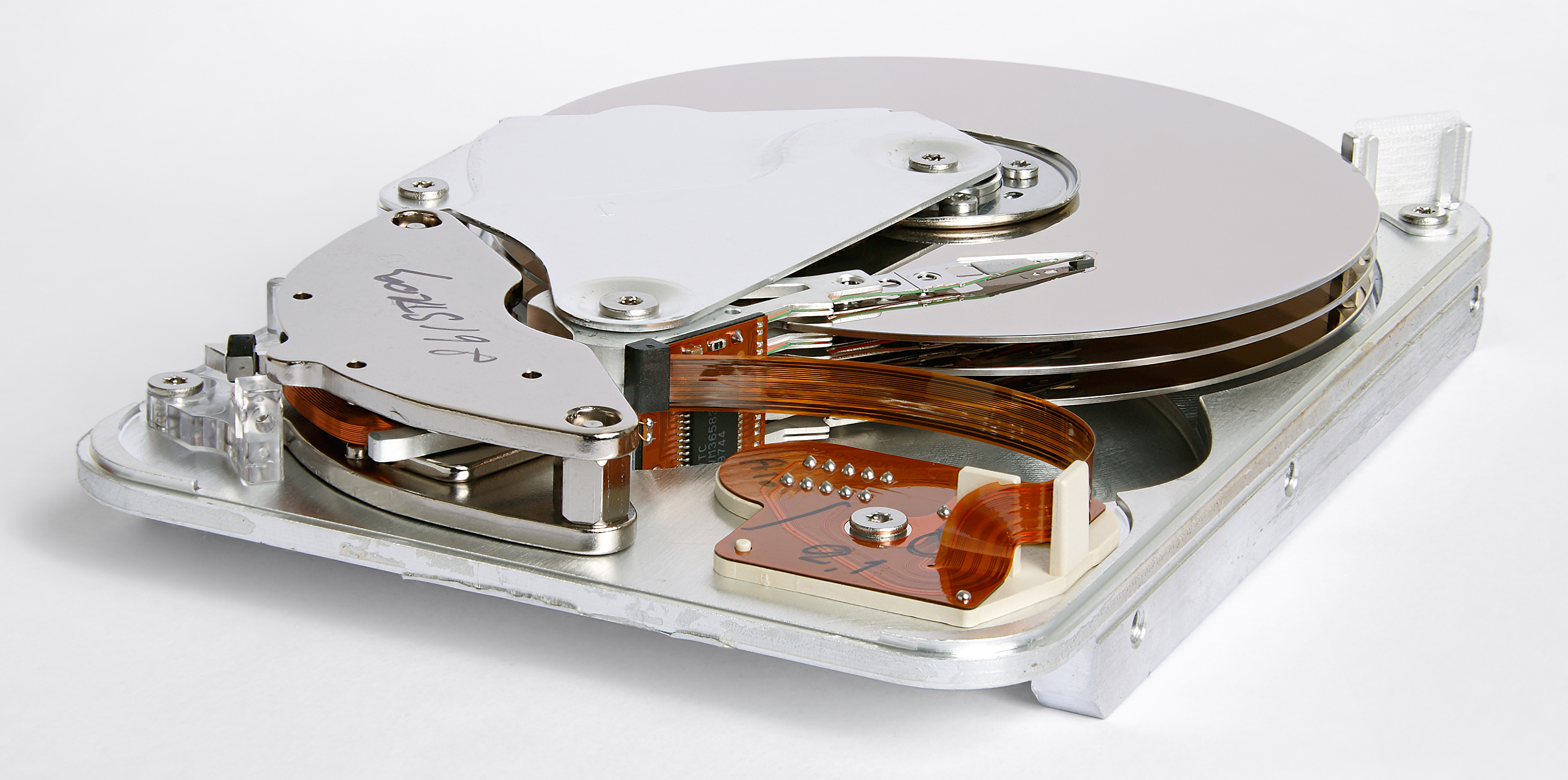
The one part of this story that should feel absurd, and doesn't anymore, is that mechanical hard drives — a decades-old technology everyone assumed AI would simply skip over on its way to all-flash storage — got swept up in the same reallocation. AI training pipelines still need enormous amounts of cheap, bulk, "cold" storage for datasets and backups, and hard drives remain the cheapest way to store a petabyte, which means hyperscalers wanted all of them too.
Western Digital's CEO confirmed on an earnings call that the company is "pretty much sold out for calendar 2026," with firm orders from its top seven customers locking up nearly all nearline (enterprise) capacity. Seagate said the same thing, with nearline capacity almost fully allocated through calendar 2027 — a level of forward booking that's practically unheard of for a hardware company. Western Digital now draws 89% of its revenue from cloud customers and just 5% from consumer retail. Consumer hard drive prices have followed the memory playbook exactly: a 4TB WD Blue that cost $67–85 a year ago was $99 by early 2026, and climbing.
Seagate's Q4 2026 earnings guidance came in nearly 26% above what Wall Street expected, on record gross margins. None of this is a company in trouble. It's a company that worked out, correctly, that it no longer needs people who buy one hard drive at a time.
The Part Where This Site's Whole Thesis Applies
Nothing here was taken away by accident, and nothing was mismanaged. Every company in this piece is more profitable now than before the shortage started. The consumer SKU didn't disappear because it stopped working — it disappeared because, for the first time in the history of the PC, someone showed up willing to pay five times as much for the same wafer, and that someone doesn't care what a "gaming PC" is. You can't have nice, affordable memory anymore for the same reason you can't have a lot of things on this site: someone else's use for it turned out to be worth more than yours.
Filed from public reporting:
- DataCenter Dynamics
- Forbes
- TrendForce
- PC Gamer
- Tom's Hardware
- The Register
- Wikipedia: 2025–present global memory supply shortage
- PC Gamer (Kingston/NAND)
- Winbuzzer
- Yahoo Finance
- 24/7 Wall St.
- The FPS Review
- Gamers Nexus — "RAM: WTF?"
- Gamers Nexus — "WTF Just Happened? | The Corrupt Memory Industry & Micron"
- Gamers Nexus — "SSDs: WTF?"


