
The Complaints Department

NYC's Emergency Outdoor Dining Program Saved 90,000 Jobs. Then the Rats Showed Up.
In June 2020, New York City let restaurants build outdoor dining setups on sidewalks and in traffic lanes with almost no red tape, a genuine emergency lifeline that the city itself credits with saving roughly 90,000 jobs. Four years later, the "almost no red tape" part was


Customers Sent AI-Generated Photos of "Damaged" Sheets That Never Existed. Some Still Had the Watermark.
E-commerce retailers spent the last decade streamlining damage claims into something almost frictionless: send a photo of the torn or wrong item, get refunded, keep the item, no box to ship back. Late in 2025, Scott Tannen, CEO of the New Jersey bedding company Boll & Branch, went public

Reddit's API Was Free for 15 Years. Then It Would Have Cost One Developer $20 Million.
Reddit's API had been effectively free since 2008, which is how an entire ecosystem of third-party apps — some of them better than Reddit's own official app — got built on top of it for free, for fifteen years. In April 2023, Reddit announced it would start

Venmo's Payments Were Public by Default for Years. The FTC Had Questions.
For years, Venmo's default setting broadcast who you paid, when, and often why — a public social feed built on top of a payment app, as if splitting a pizza bill were content. The FTC eventually decided that "bank-grade security" and "your transactions are private&

Costco Sold One Membership Per Household for Decades. Now There's a Scanner at the Door.
Costco sells membership by the household, but for decades, enforcement at checkout amounted to a cashier glancing at whatever card got handed over. Starting in 2023, that changed — first with photo-ID checks at self-checkout, then with card scanners installed at the warehouse entrance itself, meaning members now get

Waze Lets You Report Police Locations. An Entire Sheriffs' Association Asked Google to Turn It Off.
Waze lets drivers crowdsource the location of speed traps and parked patrol cars, which is either a helpful public service or an officer-safety threat depending entirely on which side of the windshield you're on. In January 2015, the National Sheriffs' Association publicly asked Google to turn
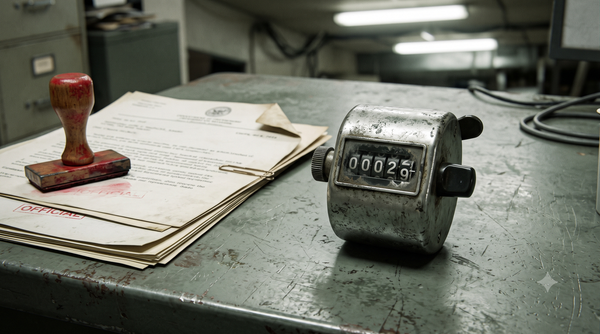
In China, a Mine Disaster Becomes the Central Government's Problem at 30 Deaths. In 2011, One Stopped at 29.
On October 29, 2011, a gas explosion tore through the Xialiuchong coal mine in Hengyang, Hunan province, with 35 miners underground. Six were pulled out alive. Xinhua's first report put the dead at 28. State television revised it upward the next day, to 29. There it stopped.

Walmart's Black Friday Doorbusters Killed a Man in 2008. The Fine Was $7,000.
Black Friday doorbusters exist to create exactly one feeling: get here first or lose out. On November 28, 2008, a crowd at a Walmart in Valley Stream, New York, took that feeling literally, breaking down the store's glass doors before opening time. Jdimytai Damour, a 34-year-old

Two Chains Took Anything Back, No Receipt Needed. Empty Bottles and Burnt Candles Ended That.
For years, Bed Bath & Beyond and Bath & Body Works ran two of retail's most generous return policies: full refunds with no receipt, no time limit, no real questions asked. Bath & Body Works called it "100% Satisfaction." Both chains tightened those policies dramatically — not
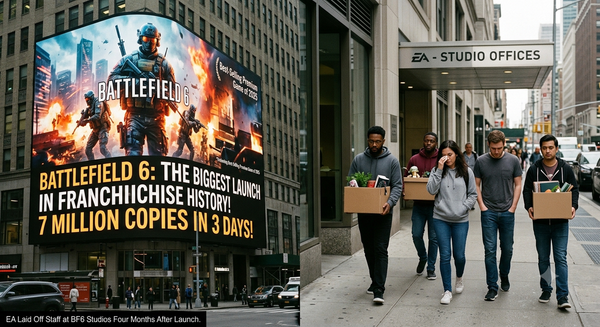
Battlefield 6 Sold 7 Million Copies in Three Days. Four Months Later, EA Laid Off the Studios That Made It.
Battlefield 6 sold seven million copies in three days. It was the biggest launch in the franchise's history, the best-selling premium video game of 2025, and by every metric EA uses to justify a bonus, an unambiguous win. Four months later, EA laid off staff across all four studios that built it.
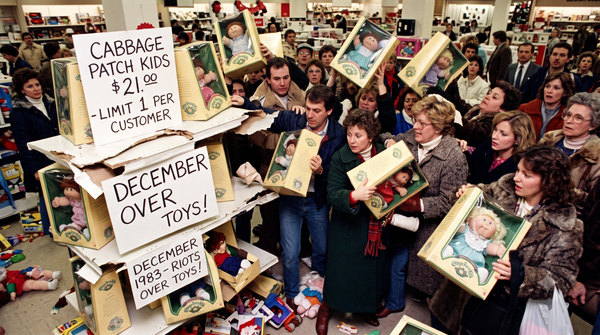
Cabbage Patch Kids Were $21. In December 1983, Adults Rioted Over Them Anyway.
In December 1983, adults broke down doors, threw boxes at each other, and got trampled in department stores over a soft-bodied doll with yarn hair that retailed for $21. Coleco's Cabbage Patch Kids were the must-have gift of the season, supply couldn't come close

AOL Promised Unlimited Internet in 1996. It Forgot to Build Enough Modems.
In December 1996, America Online did something customers had been begging for: it stopped charging by the hour and offered unlimited access for a flat $19.95 a month. Customers responded by logging on and never logging off. Within weeks, AOL's modem banks couldn't handle the