
The Complaints Department
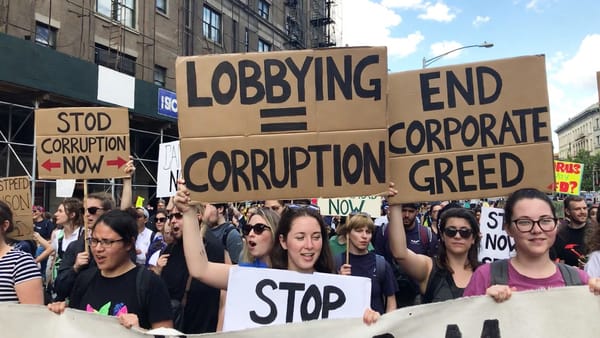
At Least 34 Former German Lawmakers Went Straight Into Lobbying After Leaving the Bundestag. There's Still No Law Stopping Them.
Germany's insurance lobby alone spent €15.29 million influencing federal policy last year, filed correctly and on time. What the register still doesn't track is where the lawmakers go next.

A Teacher Joked About a Student on Snapchat. Police Were at Her School in an Hour, With No Human in Between.
Snapchat's AI flagged a private joke and routed it to the FBI, which routed it to local police, in under an hour. The federal watchlist center it fed into just asked vendors to help it predict who's next.

A Hacker Guessed 14,000 Recycled Passwords. 6.9 Million People's DNA Data Went Out the Door.
23andMe let a credential-stuffing attack on 14,000 accounts expose the genetic data of 6.9 million people, then went bankrupt and sold what was left of that data back to the CEO who was running it when the breach happened.

Flint Switched Its Water Supply to Save Money. The Corrosion Control It Skipped Cost $100 a Day.
Flint's 2014 water switch poisoned thousands of children and killed 12 people in a Legionnaires' outbreak; every criminal charge against officials was later dismissed on procedural grounds, not the facts.

Johnson & Johnson's Talc Subsidiary Filed for Bankruptcy Three Times. Johnson & Johnson Never Did.
J&J spent seven years insisting its baby powder never contained asbestos while a subsidiary it created to hold the talc lawsuits tried three times to use bankruptcy to freeze them, and lost all three times.
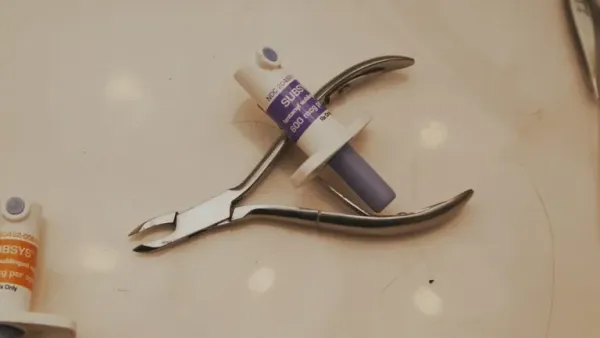
Insys Bribed Doctors to Prescribe a Cancer-Only Fentanyl Spray to People Without Cancer. Its Founder Got 5.5 Years.
Insys Therapeutics ran a bribery scheme disguised as a doctor speaker series and an insurance call center trained to lie, until its founder became the first pharma executive convicted of racketeering over the opioid crisis.
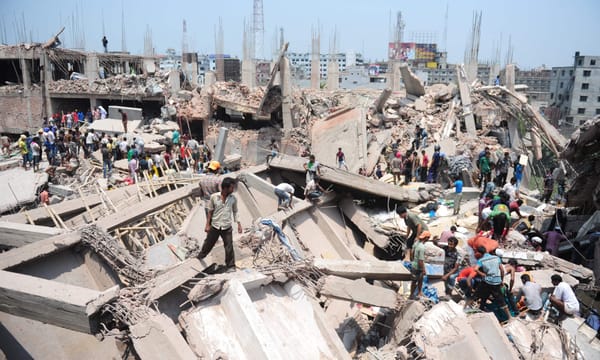
Rana Plaza's Ground Floor Bank Closed the Day Before It Collapsed. The Garment Workers Upstairs Were Told to Report for Their Shift.
A Bangladeshi bank evacuated Rana Plaza the day cracks appeared in its walls. The five garment factories upstairs, sewing for Primark, Walmart, Benetton, and Mango, sent workers back the next morning.

Siemens Ran a $50 Million-a-Year Bribery Budget Out of One Division. The Man Who Ran It Got a Suspended Sentence.
Siemens paid roughly $1.4 billion in bribes across a decade to win contracts worldwide, settled for a record $1.6 billion, and the manager who ran the slush fund got two years' probation.

HSBC Laundered $881 Million for Drug Cartels. The Justice Department Called It Too Big to Jail.
HSBC admitted moving Sinaloa cartel cash through custom-built boxes and stripping sanctions paperwork for Iran; the DOJ's $1.9 billion settlement charged no individual, and the case was dismissed in 2017.

The SEC Investigated Bernie Madoff Five Times. His Own Sons Caught Him in One Conversation.
Harry Markopolos handed the SEC a 29-point memo proving Madoff's returns were fraudulent in 2005; five SEC exams later, it was Madoff's own sons who turned him in, in December 2008, over a bonus dispute.

The Supreme Court Took 19 Years to Decide Exxon's Fine. A Fifth of the Plaintiffs Were Dead by Then.
A jury awarded Exxon Valdez spill victims $5 billion in 1994; the Supreme Court cut it to $507.5 million in 2008, a sum smaller than 1.25% of Exxon's profit the year before.

Union Carbide's Bhopal Plant Ran Its Safety Systems Off for Years to Save Money. Then One Night, It Needed All of Them.
A 1984 gas leak at Union Carbide's Bhopal plant killed thousands after its refrigeration, flare tower, and scrubber systems were all found disabled or undersized on the same night, and the man India charged with homicide never stood trial.